How do LCD, LED and OLED TVs work?
14 minutes · Intermediate
Simulations and quizzes aren't read aloud; pause when you reach them and try them out.
Most televisions sold today are actually LCD televisions. They're called "LED TVs" because the backlighting is done with LEDs. To repair them, you first need to know how the picture is formed, because the picture on the screen often tells you which board a fault comes from.
LCD: millions of shutters that let light through or block it
The LCD panel itself doesn't produce light. Liquid crystals trapped between two sheets of glass let light through or block it depending on the voltage applied to them. Each pixel is made of three sub-pixels, red, green and blue, and each sub-pixel has a color filter in front of it. A 4K panel has about 25 million sub-pixels, and each one is updated 50–120 times a second by the driver ICs along the edge of the panel.
The backlight: the screen's lamp
Because the pixels are only shutters, a strong, even light source is needed behind them:
- CCFL (old): LCD TVs before 2010 used thin fluorescent tubes. They needed high-voltage "inverter" boards.
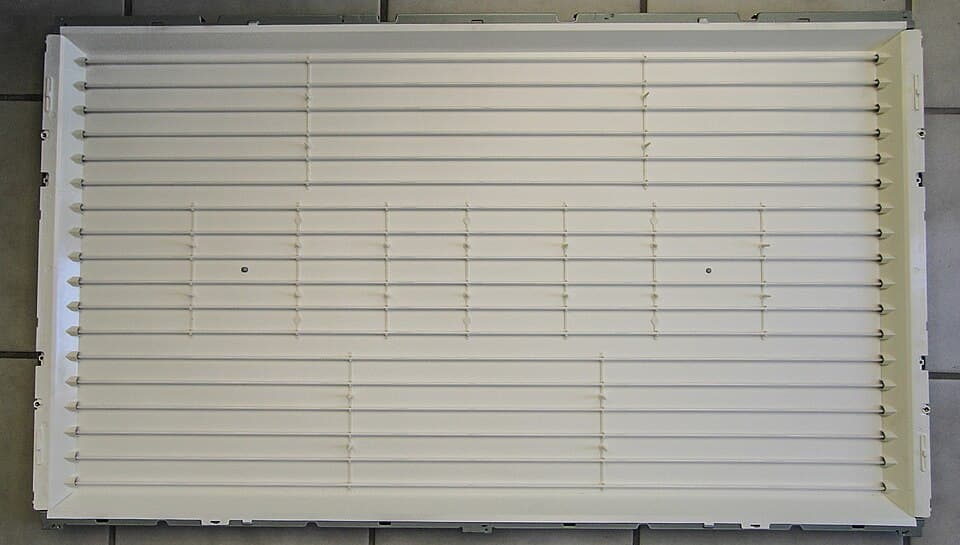
- Direct LED: the LEDs are arranged in rows on bars behind the panel. Each LED has a small lens in front of it to spread the light. Most of today's affordable TVs are like this.
- Edge LED: the LEDs are only at the edges; the light is spread across the surface by a light guide plate behind the panel. Used in thin TVs.
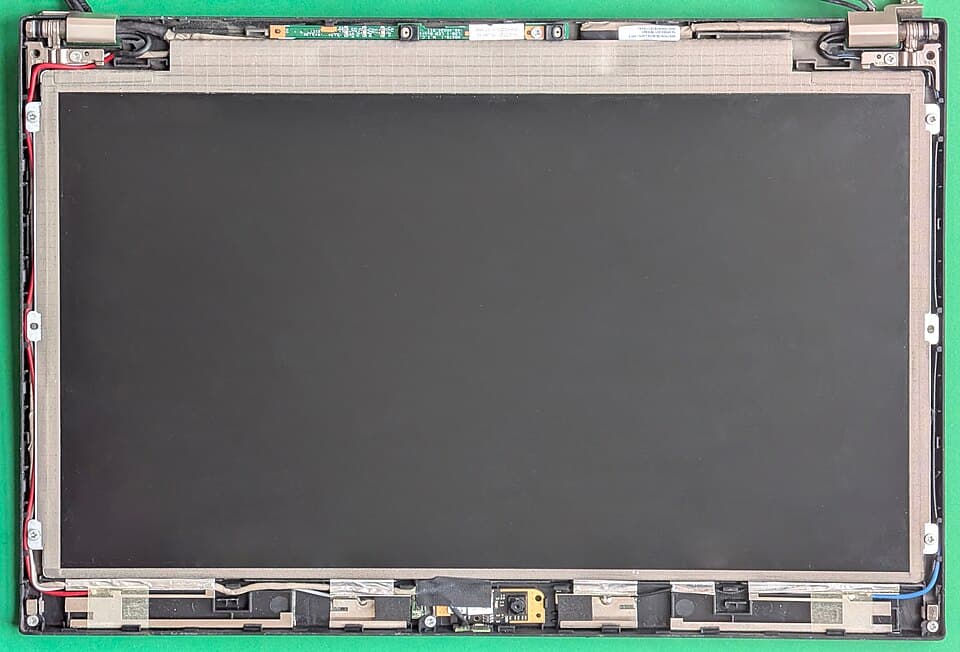
📷 Real-world view
OLED and QLED
In OLED screens each pixel produces its own light; there's no backlight. That's why the blacks are truly black. QLED is a marketing name: it's an LCD with LED backlighting and a "quantum dot" film that improves the colors. From a repair point of view, a QLED works the same way as an LED TV.
The most important test in repair: a flashlight
Does the TV turn on and have sound, but the screen is completely dark? Hold a flashlight close to the screen. If you can see the picture, however faintly, the panel and main board are working; the problem is in the backlight (the LED bars or LED driver). This is the most common LED TV fault.Test yourself
1. What is an 'LED TV' really?
2. Which screen type has no backlight?
3. There's sound and the screen is dark, but with a flashlight you can make out the picture. Where is the fault?
4. What do the liquid crystals in an LCD do?
This was the free first lesson of the course
The remaining 7 lessons of LED TV Boards and Their Faults, with their simulations and quizzes, unlock when you buy the course.
See the full course →