Potentiometer and trimpot
A resistor whose value changes as you turn it.
- Schematic letter
- RV / VR
- Unit / key rating
- Ohm (Ω)
Pinout
- 1 and 3 (outer pins): Fixed resistance between them; tied to supply and GND.
- 2 (wiper): Gives a voltage or resistance that depends on the position.
What is it for?
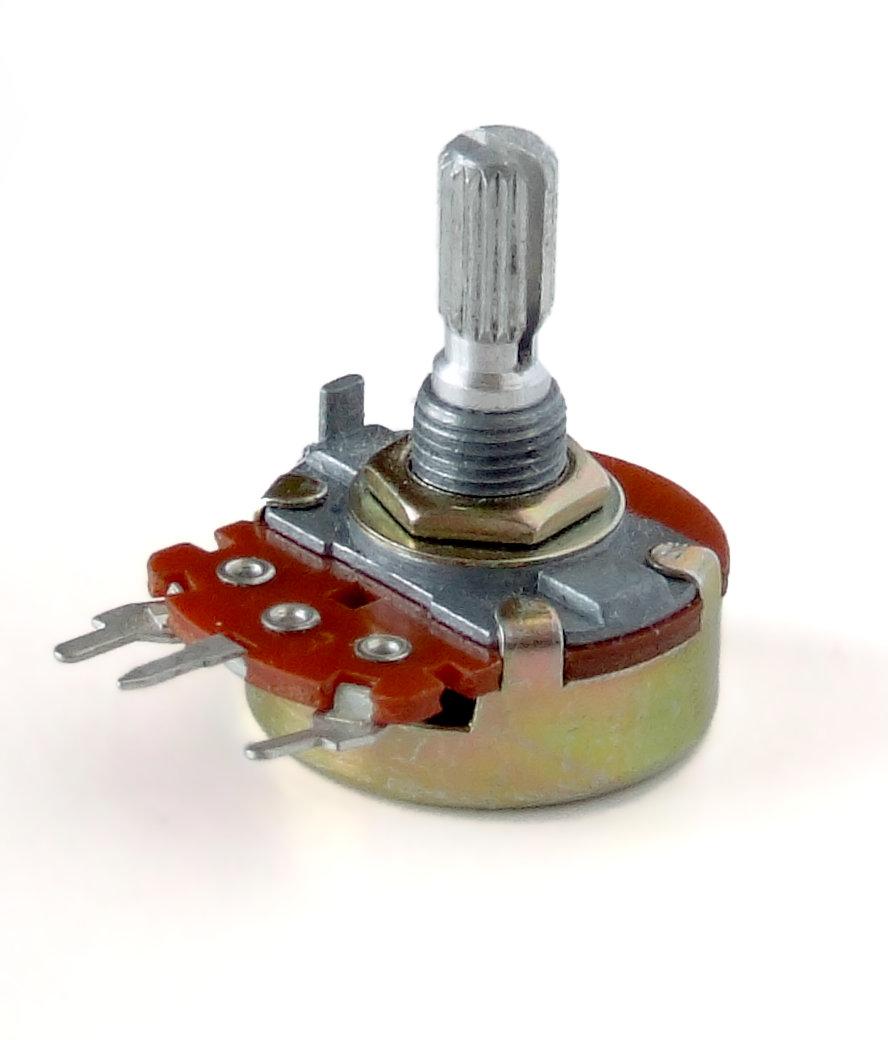
A potentiometer is a resistive track with a wiper (the middle pin) moving along it. The resistance between the two outer pins is fixed; the resistance between the wiper and either outer pin depends on the shaft position.
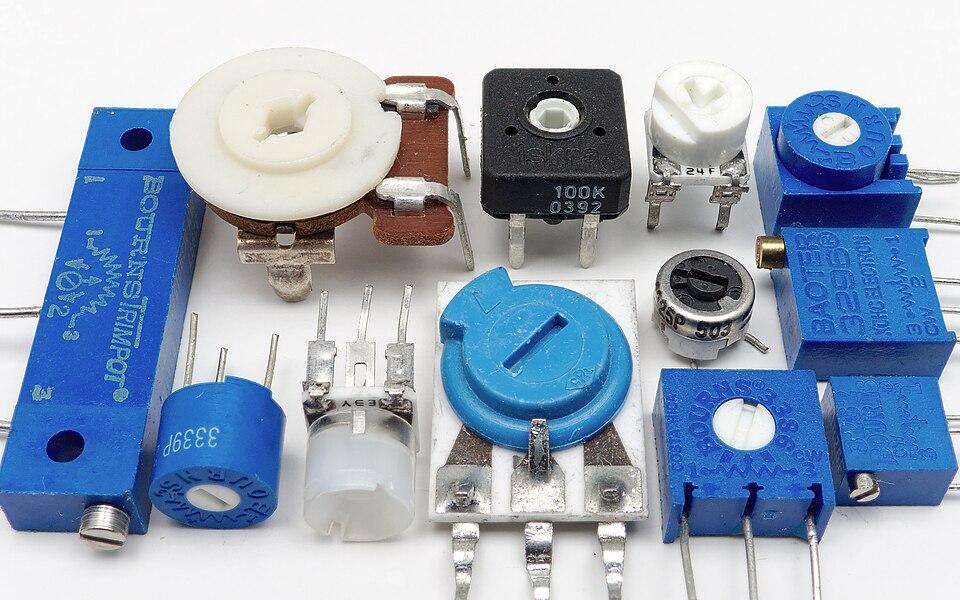
It's mostly used as a voltage divider: volume, brightness, a sensor's threshold. A trimpot is a small potentiometer on the board, set once with a screwdriver and left alone.
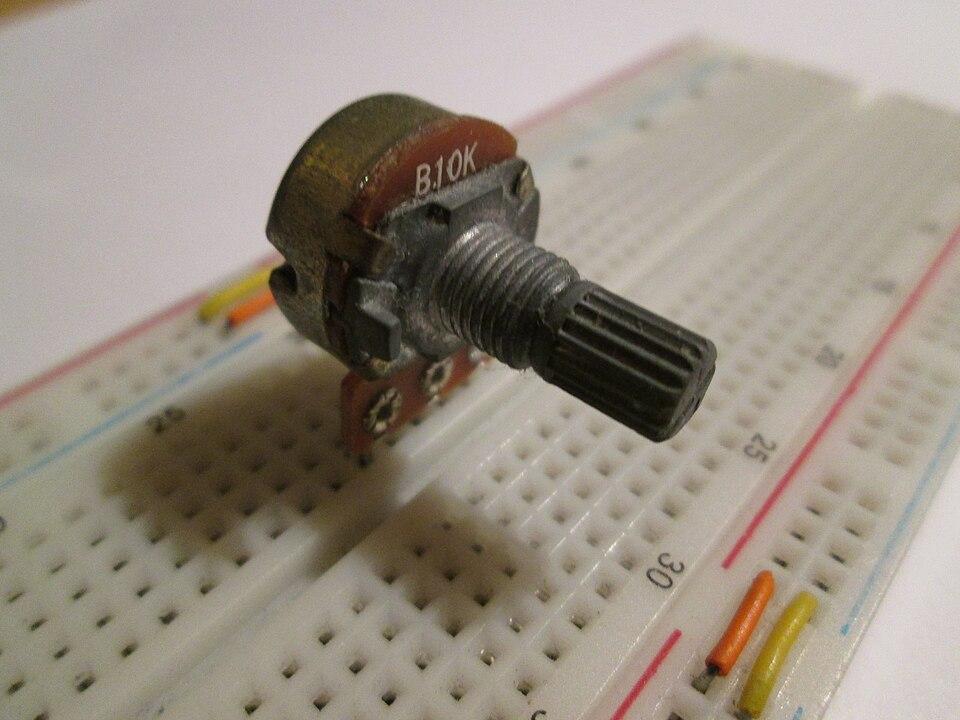
In a linear (B) pot the resistance changes evenly with angle; a logarithmic (A) type changes in a way that suits volume controls.
📘 Electronic Component Cards
Resistor, capacitor, diode, LED, transistor, inductor, relay and potentiometer: what each does, its schematic symbol, pinout and common mistakes. Print it and keep it on your desk.




🔒 This content is in the repair pack
The repair pack unlocks all interactive content in one go: diagrams and current flows, the Repair Workshop, simulations, concepts, IC guides, the Component Library and comparison guides. One sample in every section is free.
Repair pack: 5,000 ₺, members get 10% off → 4,500 ₺. Or 1-week access for 1,000 ₺.