Resistor
Limits current, divides voltage.
- Schematic letter
- R
- Unit / key rating
- Ohm (Ω)
Pinout
- 2 leads: No polarity; it can be inserted either way round.
Real photos
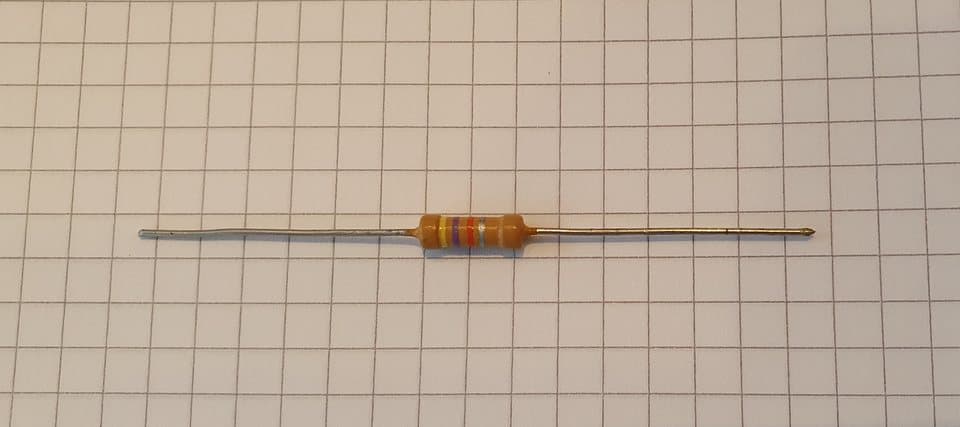
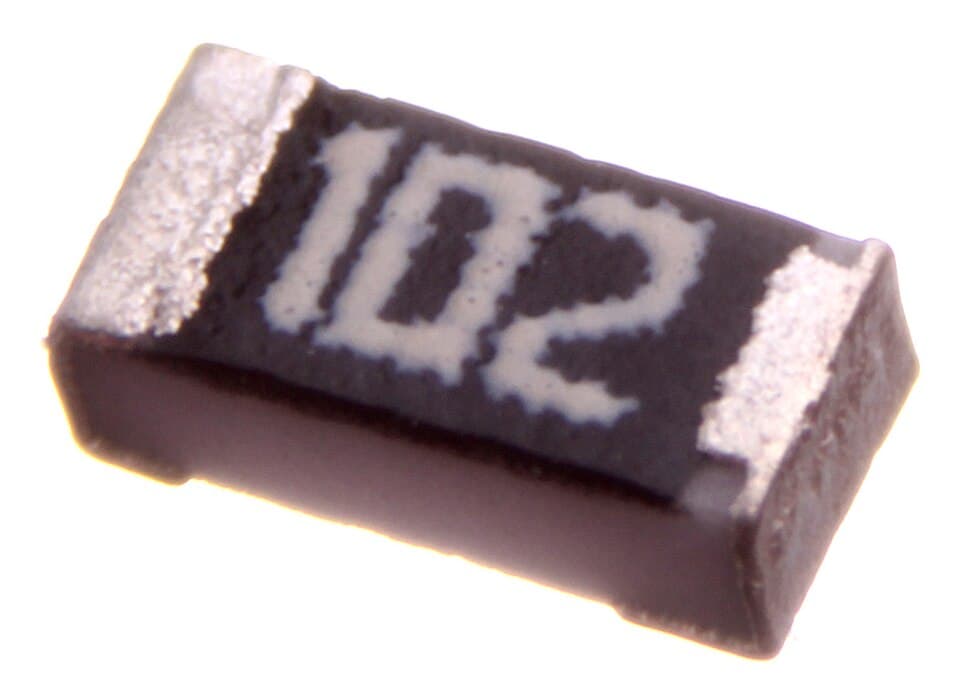
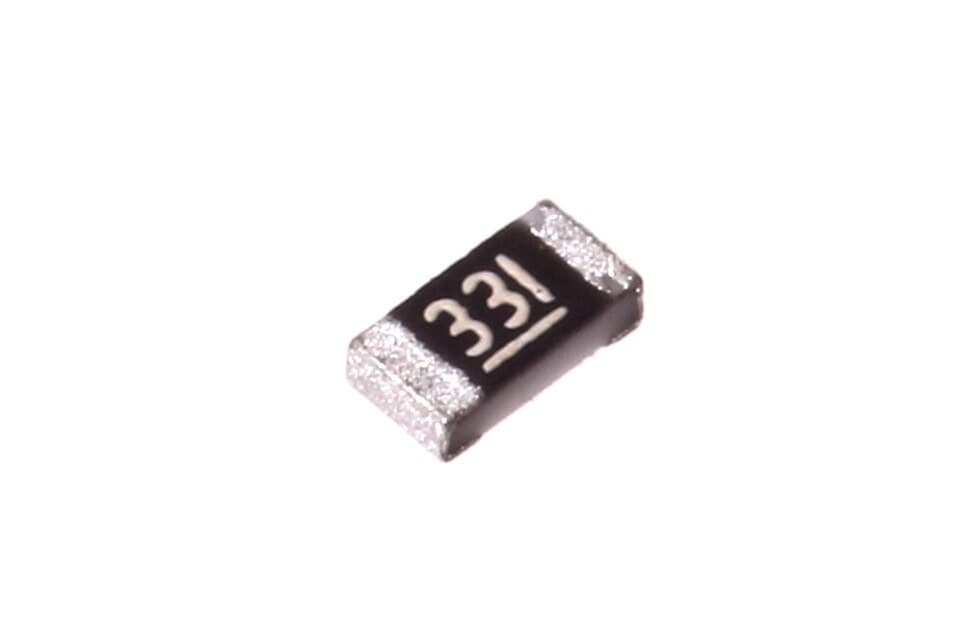
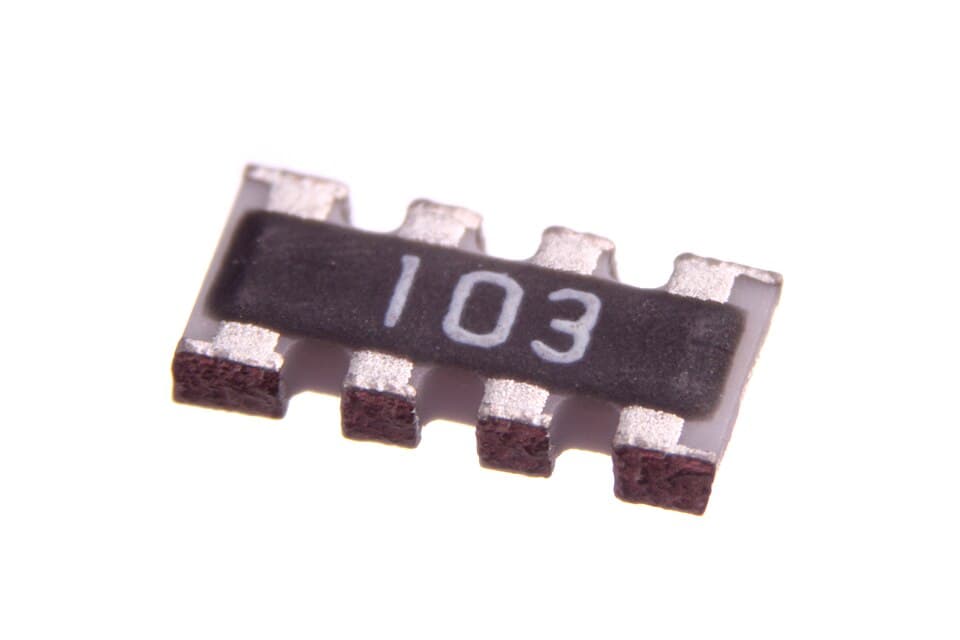
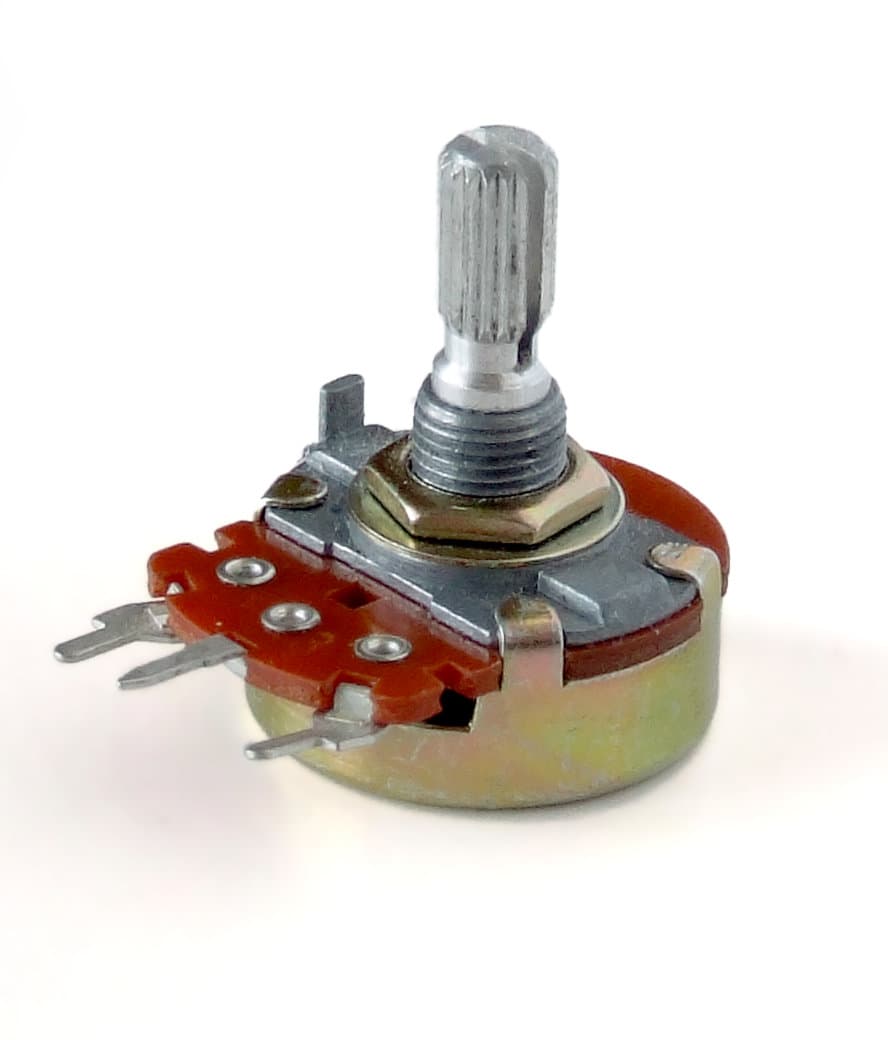
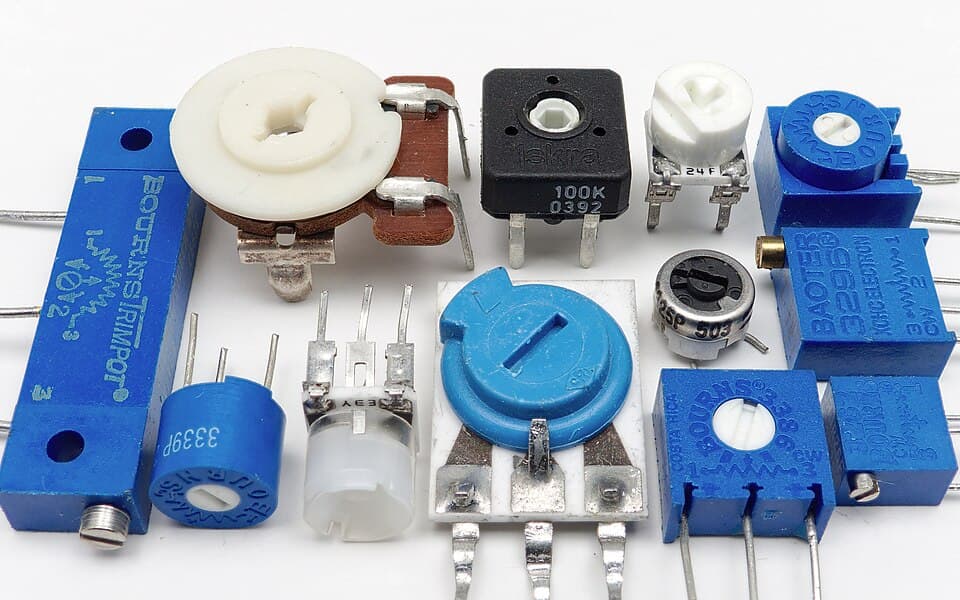
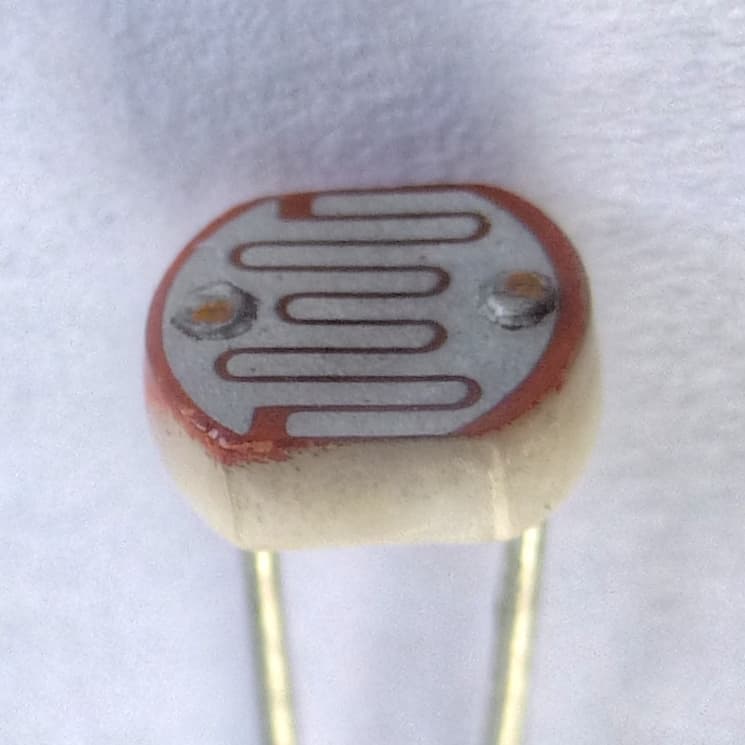
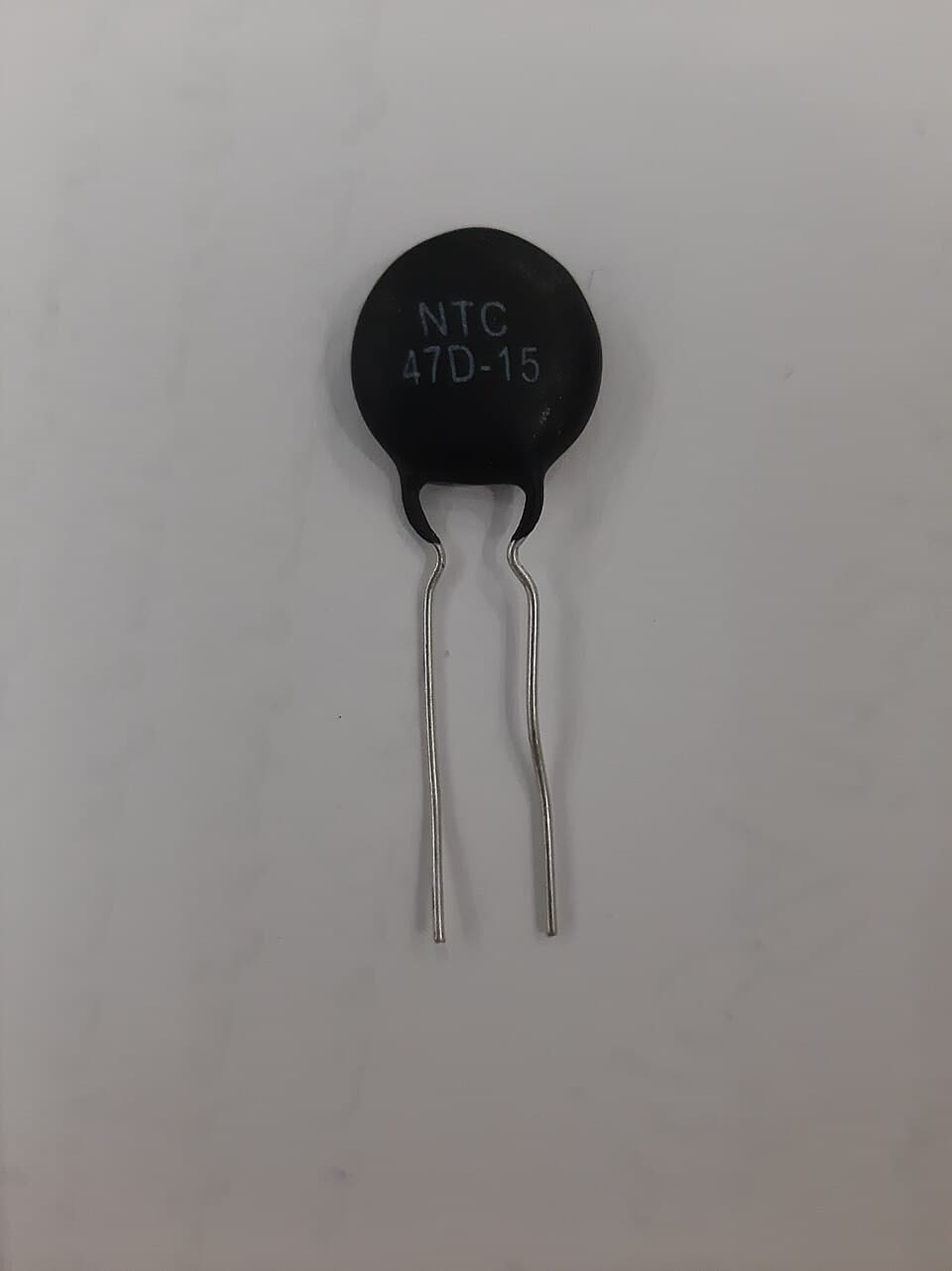
What is it for?
The resistor is the most basic electronic component: it opposes the current flowing through it. Its value is measured in ohms (Ω).
In circuits it is mostly used to limit the current of parts such as LEDs, to divide voltages and to set the base current of transistors.
The value of a through-hole (THT) resistor is read from the colored bands on its body. Pick the colors in the calculator below to find the value.
4-band color code calculator
1 kΩ±5% tolerance(10) × 100 = 1000 Ω
SMD resistor code reader
10 kΩ
3-digit code: the first two digits (10) are the value, the last digit (3) is the number of zeros.
- 3 digits (5%): 103 = 10 × 10³ = 10 kΩ.
- 4 digits (1%): 1002 = 100 × 10² = 10 kΩ.
- EIA-96 (small 1% parts): two digits + a letter; the digits give the value from a table and the letter gives the multiplier. 01C = 100 × 100 = 10 kΩ.
- On 0402 and smaller packages there's usually no marking at all; the value can only be found by measuring or from the reel label.
Things to watch out for
- ⚠ Mind the power rating: a 1/4 W resistor gets hot and burns if it has to dissipate more than 0.25 W (P = I² × R).
- ⚠ Measuring a resistor in circuit can give a wrong reading; lift at least one lead before measuring.